
Eligibility and Benefits Verification for Cleaner AI-Assisted Workflows
TL;DR — Cleaner RCM Starts With Better Eligibility Verification
Eligibility and benefits verification is a front-end RCM control point, not just a billing or front-desk task.
Delayed or incomplete verification can create authorization delays, billing confusion, claim friction, and avoidable rework.
Common breakdowns include incorrect insurance details, late eligibility checks, unclear benefit documentation, payer-specific rules, and missed escalations.
The verification workflow should include patient intake, payer verification, benefit confirmation, documentation, routing, escalation, and clean handoffs.
AI-assisted contact center operations can support structured intake, caller intent capture, Agent Assist, payer response documentation, QA visibility, and escalation signals.
AI should not replace verification teams or make payer-related decisions. Complex, unclear, or exception-based cases should remain human-led.
AMI supports eligibility and benefits verification with trained teams, AI-assisted workflows, payer follow-up documentation, QA visibility, escalation, and co-managed oversight.
Eligibility and benefits verification is often treated as a simple front-desk or billing step, but it directly impacts scheduling, prior authorization, patient communication, claim accuracy, and denial prevention. When verification is delayed, incomplete, or poorly documented, the problem usually appears later as billing confusion, authorization delays, rework, or avoidable claim friction.
In healthcare revenue cycle workflows, clean outcomes often depend on what happens early. If patient insurance details are incorrect, coverage is inactive, benefits are unclear, or payer responses are not documented properly, downstream teams may have to fix the issue much later.
AI-assisted contact center operations can help healthcare teams manage the repeatable parts of verification workflows, including patient and insurance detail intake, payer follow-up documentation, routing, summaries, QA visibility, and escalation signals. The goal is not to replace verification teams or make payer decisions. The goal is to make the process more consistent, visible, and easier to act on.
What Eligibility and Benefits Verification Means in Healthcare
Eligibility and benefits verification is the process of confirming whether a patient’s insurance coverage is active and understanding the relevant benefit details before care, billing, or authorization workflows move forward.
This may include confirming payer information, member ID, group number, plan status, effective dates, coverage limitations, co-pays, deductibles, coordination of benefits, referral requirements, and authorization requirements.
For healthcare teams, the process is not only about checking whether insurance is active. It is also about understanding what the patient’s plan may cover, what information needs to be documented, and whether the case needs routing to billing, scheduling, authorization, or patient access teams.
Why Eligibility and Benefits Verification Matters for Front-End RCM
Strong verification supports a cleaner front-end RCM. It helps healthcare teams schedule more accurately, prepare prior authorization workflows, communicate patient responsibility more clearly, and reduce avoidable claim issues.
When teams verify medical insurance eligibility early, they can catch inactive coverage, incorrect payer details, missing secondary insurance, or plan-specific requirements before the workflow moves too far downstream.
This also supports denial prevention. Many preventable claim issues begin before billing, especially when insurance information is incomplete, eligibility is not confirmed, or benefits are misunderstood. Cleaner verification creates cleaner handoffs between the contact center, registration, billing, authorization, and RCM teams.
Where Eligibility and Benefits Verification Breaks Down
Verification gaps usually happen because of incomplete intake, payer variation, manual follow-up, unclear documentation, and weak escalation. These issues may look small at first, but they can create serious workflow friction later.
Missing or incorrect patient insurance details
Incorrect member IDs, payer names, group numbers, dates of birth, spelling, outdated insurance, or missing secondary coverage can make it harder to verify medical insurance eligibility accurately.
If these errors are not caught during intake, they can affect scheduling, eligibility checks, authorization readiness, claim accuracy, and patient billing communication.
Coverage status is checked too late
When teams wait too long to check patient insurance eligibility, coverage problems may be discovered after scheduling, during authorization, or close to claim submission.
Late checks can create rushed follow-ups, patient confusion, delayed services, or avoidable administrative rework.

Why do healthcare contact centers struggle even after adding more agents?
Because rising volume, fragmented systems, repeat calls, and delayed escalations need more than staffing. AMI combines AI voice, AI non-voice, and trained human agents to improve routing, documentation, QA visibility, and service execution.
Benefits are confirmed, but not documented clearly
Eligibility and benefits information is only useful if it is documented in a way downstream teams can understand. Payer responses, coverage limitations, co-pays, deductibles, reference numbers, and next steps should be captured clearly.
Poor documentation can create repeated payer checks, unclear patient responsibility, and weak handoffs between the contact center and RCM teams.
Payer-specific rules create confusion
Different payers may have different portals, call workflows, authorization rules, documentation expectations, and plan limitations. Without clear workflow guidance, teams may miss important details or route cases incorrectly.
This is where benefits verification healthcare workflows need structure, not just manual effort.
Exceptions are not escalated early enough
Unclear coverage, inactive insurance, missing information, payer discrepancies, or urgent service needs should be escalated before they create billing or authorization delays.
When exceptions stay buried in notes or queues, downstream teams often discover the problem too late.
The Eligibility and Benefits Verification Process in Medical Billing
The eligibility and benefits verification process in medical billing usually starts with patient intake and insurance detail capture. Teams confirm payer information, member ID, group number, coverage status, benefit details, and any payer-specific requirements.
A practical workflow often includes:
- Patient and insurance detail intake
- Payer verification through portal, call, or approved workflow
- Benefit confirmation and documentation
- Identification of coverage issues or missing information
- Routing to billing, authorization, scheduling, or patient access teams
- Escalation for unclear or exception-based cases
- Handoff documentation for downstream teams
The process works best when teams know exactly what to capture, where to document it, and when to escalate.
How AI-Assisted Contact Centers Can Support Eligibility and Benefits Verification Workflows
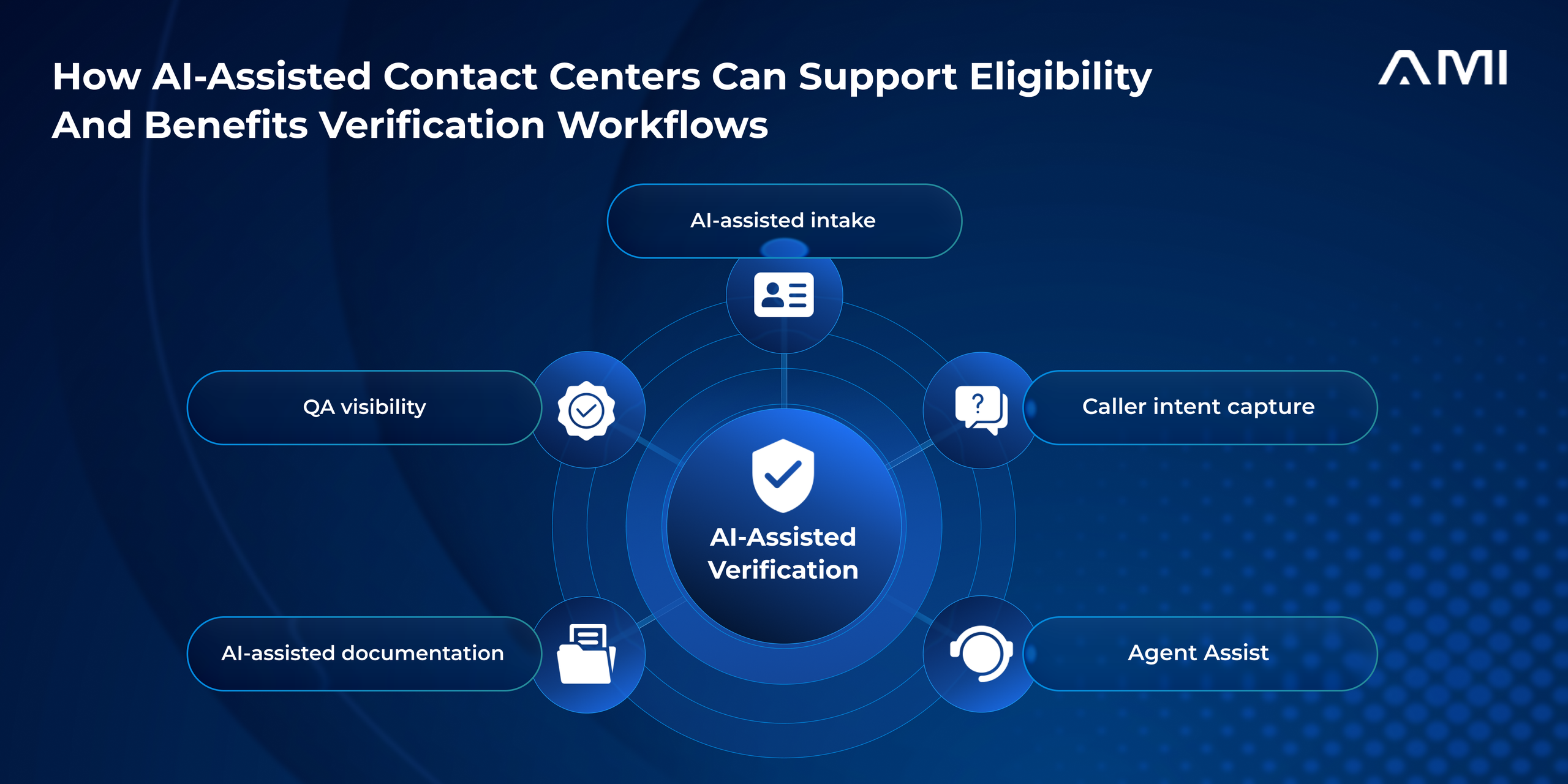
AI-assisted contact center operations can support eligibility workflows by improving intake consistency, payer follow-up documentation, routing, summaries, QA visibility, and escalation signals.
AI should support the operational layer around verification. It should not replace trained teams, interpret complex payer rules independently, or make decisions that require human review.
AI-assisted intake can reduce missing insurance details
Structured prompts can help agents collect required insurance fields more consistently before verification begins. This may include payer name, member ID, group number, date of birth, policyholder details, secondary coverage, and service-related context.
This reduces avoidable rework caused by incomplete intake.
Caller intent capture can route verification requests faster
AI can help identify whether the caller needs eligibility verification, benefits clarification, authorization support, billing help, or escalation.
This helps route the interaction to the right workflow faster and reduces unnecessary transfers.
Agent Assist can guide reps through payer-specific questions
Agent Assist can support live agents with approved prompts, payer-specific checklists, next steps, documentation reminders, and escalation cues.
This is especially useful when reps need to follow different payer workflows while keeping the interaction accurate and consistent.
AI-assisted documentation can make payer responses easier to use
AI-assisted summaries and structured notes can help capture payer responses, benefit details, reference numbers, limitations, and follow-up actions more consistently.
This improves handoffs and reduces the need for downstream teams to repeat the same payer checks.
QA visibility can surface recurring verification gaps
AI-assisted QA can help leaders identify repeated missing fields, unclear documentation, missed escalations, payer-specific bottlenecks, or inconsistent workflows.
This helps improve training, scripts, documentation standards, and process design over time.
What Should Stay Human-Led in Eligibility and Benefits Verification
Not every verification issue should be handled through automation. Human review is still needed when payer responses are unclear, coverage is inactive, benefit details conflict, patient responsibility may be affected, authorization readiness is uncertain, or the case requires escalation.
Human teams should also manage urgent service needs, payer discrepancies, complex secondary coverage issues, and any situation where judgment is required.
AI can help surface the issue earlier. Trained teams should decide what it means and what action should follow.
How AMI Supports Eligibility and Benefits Verification Workflows
AMI supports healthcare organizations with co-managed Revenue Cycle Management and AI-first Healthcare Contact Center Operations that help strengthen eligibility and benefits verification workflows.
The model combines trained healthcare support teams, AI-assisted intake, Agent Assist, payer follow-up documentation, QA visibility, and escalation workflows so teams can reduce verification gaps before they affect authorizations, billing, or claim submission.
AMI supports:
- Patient and insurance detail intake support
- Eligibility and benefits verification workflow support
- Payer follow-up documentation
- Agent Assist for approved verification prompts
- AI-assisted summaries and structured notes
- Escalation for unclear or exception-based coverage issues
- QA visibility into recurring verification gaps
- Co-managed operations with client oversight
For healthcare leaders, the value is not just faster verification. The value is a cleaner front-end workflow where missing information is easier to catch, payer responses are easier to use, and exceptions are escalated before they create downstream friction.
Want cleaner eligibility and benefits verification workflows?AMI helps healthcare teams improve intake accuracy, payer follow-up documentation, escalation, QA visibility, and front-end RCM consistency with AI-assisted workflows and trained support teams.
Get in TouchFrequently Asked Questions
About the Author
Written by
Urza Dey
Urza Dey is a content and copywriter with over five years of experience across marketing, B2B SaaS, HealthTech, EdTech, and related industries. At AMI, they contribute to content strategy, blog development, and marketing communication focused on healthcare operations, business process management, and AI-enabled service delivery.